An exercise of finding closure and/or an opportunity for self-reflection? An existential outlook.
One of the biggest challenges in living is grasping the idea of death and allowing ourselves to embrace it. We have moved further and further away from the reality of death, acting and thinking as if we are immortals. We often hide behind our thoughts, avoid our emotions with the cost of losing true meaning in life. We constantly worry about the future, missing out on the present where life actually happens.
Becoming aware and embracing our finite nature, holds great importance in how we actually live our lives and the meaning we put into it. A lot of people decide to leave letters to their loved ones to be read after they are gone, which can be considered as a great exercise of self-reflection giving both the writer and the reader the opportunity to acknowledge the life they shared. Towards the end of our lives our awareness of death increases, which tends to lead to a natural self-reflection of how we have lived our lives and the meaning we have assigned in different aspects of it including our relationships.
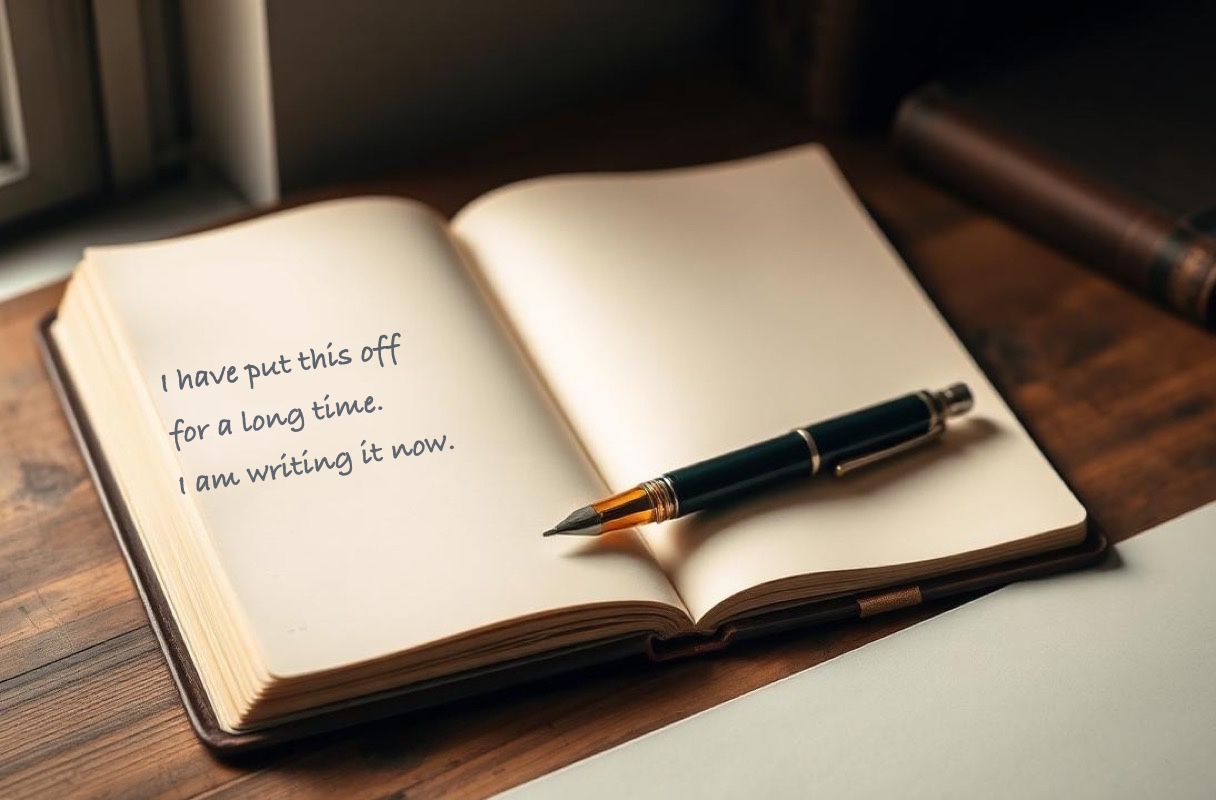
Writing a letter to our loved ones can be an exercise in preparation of death and also be an exercise to help us live more honestly towards ourselves and others at any point of our lives.
Existential philosophy begins, in part, with a simple but unsettling recognition: human beings are finite. We have freedom, possibilities and choices, but those possibilities exist within limits. Acknowledging and embracing the idea of death as a given can give humans the opportunity to live their lives more fully. According to the philosopher Jean Paul Sartre ‘while you do not choose your physical condition, you are entirely free to choose the meaning, attitude, and value you give to it’. In this respect, writing letters can have a form of evaluation towards life and offer a deeper understanding of our emotions, relationships and experiences.
Have you ever wondered, which are the moments in your life that have been important to you? Are you alone? Are you with others? And even when you are alone, are you truly alone or are you surrounded by nature? When we allow ourselves to contemplate mortality, the ordinary things of life can acquire a different significance, a different quality. Paul Tillich called this kind of response ‘the courage to be’: the courage to affirm our existence despite the anxieties, uncertainties and limitations that inevitably accompany it. Writing a letter to someone we love is one small expression of that courage, enabling us to express our truth in life, in a form of an evaluation, acknowledging what we consider important and unimportant in life.
Allowing ourselves to write the ‘goodbye letters’ means we also allow ourselves to confront different emotions that we hold and to express them. From early age, we learn to close our emotions up, not having the space to express them or even worst considering that emotions should not be expressed. Humans tend to disengage themselves from their emotions, which often makes it very hard to be aware of how we feel and it can be even harder to express those feelings to others. Acknowledging our emotions requires a deliberate reflection and discussion with ourselves. A letter can give voice to those emotions and an opportunity to share them.
It can be argued that it is preferable to share our feelings in a face to face interaction, but as this can be challenging for many, writing can be a means for free and honest emotional expression. A letter gives us a chance to acknowledge and share our regrets, offer our apologies, but also show our love and appreciation of the significant people we share our lives with. Speaking honestly can soften what has remained hard and unspoken and through this form of expression a reconciliation with ourselves can follow.
When we take the time to write such a letter it’s worth considering ‘What do I want the people I love to know and what information do I want to pass on ?’ ‘What is it that I want to share with them that I feel I can’t now’. Readers of the letter might experience a wide range of feelings, they might be surprised, shocked, upset or grateful. The truth is we do not know how people will feel when they read the letters, and we will never find out. But perhaps it’s worth considering what would you like them to feel? The letters serve both the writer and the receiver in similar ways.
For them too it can be an opportunity for self-reflection. It can give them a chance to rethink how they live their lives, and contemplate around the notions of meaning, personal truth, presence, honesty and authenticity. It is also a chance to honor the relationship, acknowledge the loss and hopefully feel the closure needed to continue life.